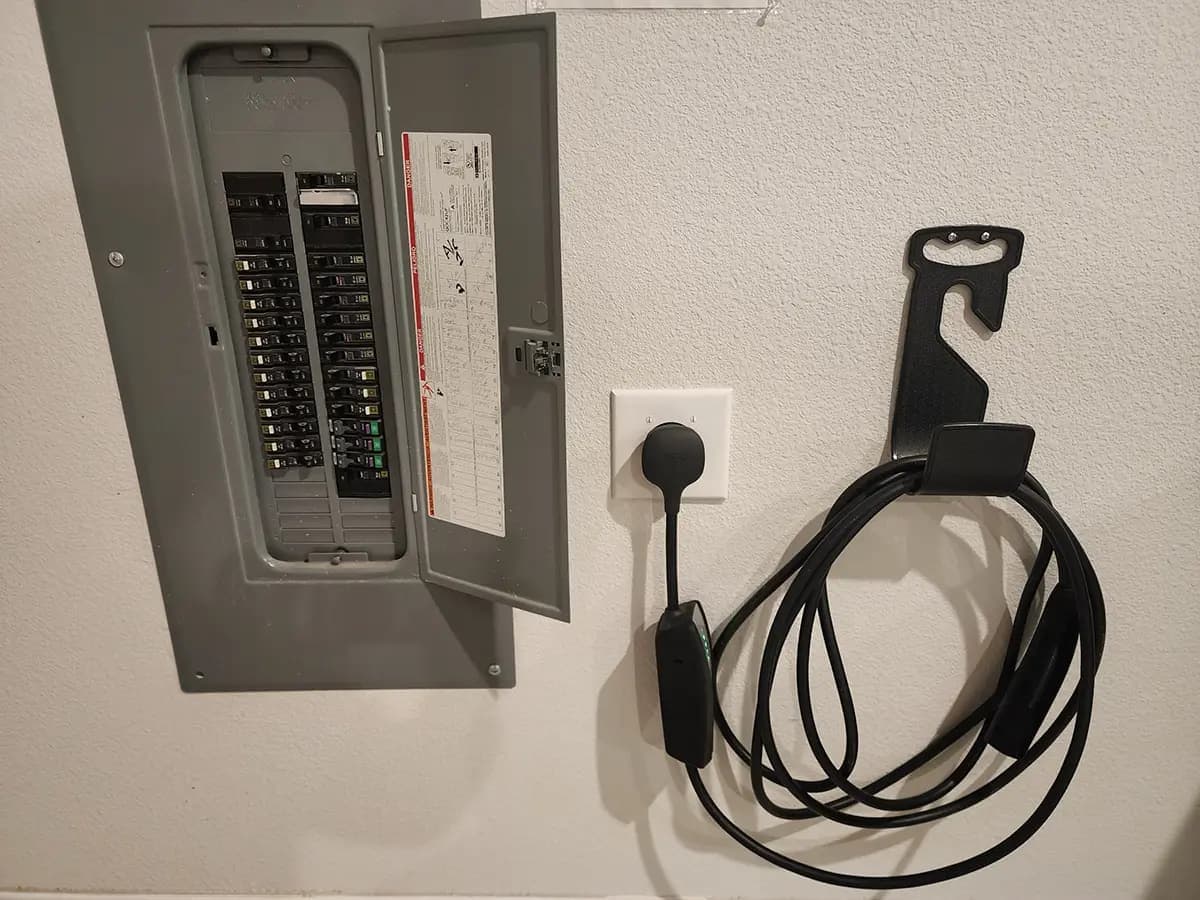
"Electrical panel brands to avoid" is a search that returns a lot of confident writing and not much documentation. Some of it is accurate. Some of it repeats a recall that never happened, and a fair amount of it is a sales page in the shape of a safety warning.
What follows is the version with the receipts attached, because the distinction matters to what you should actually do. Three completely different problems get filed under the same heading, and only one of them is a reason to stop what you are doing.
The short answer
Federal Pacific Electric (Stab-Lok), Zinsco and Sylvania-Zinsco, and some Challenger panels have a documented history of breakers that may fail to trip under fault conditions. That is a safety concern, and the fix is replacement, not repair. A second group - Pushmatic and Bulldog, Wadsworth, GTE-Sylvania, split-bus panels and fuse boxes - is not accused of a defect; it is obsolete, out of production, and hard to get listed parts for, which is an inconvenience and a capacity problem rather than an emergency. Separately, counterfeit breakers carrying a legitimate brand name are a real and current hazard, and modern name-brand panels get recalled too.
Three different problems, one search term
Before any brand names, it is worth being clear about what "avoid" can mean:
- A documented defect. The equipment may not perform its one safety function. This is the FPE and Zinsco category, and it is the only one where the panel itself is the hazard.
- Obsolescence. The equipment worked as designed but is no longer manufactured, listed replacement breakers are scarce or gone, and the design is usually undersized for a modern house. Nothing is actively dangerous; you simply cannot maintain or expand it properly.
- Counterfeits. The brand on the label is fine. The breaker in the panel was never built or tested by that manufacturer.
Most articles on this subject blend the first two and never mention the third.
Federal Pacific Electric (Stab-Lok): what the record actually says
This is the brand that generated the entire topic, and the public record is more specific - and more limited - than the internet version.
The CPSC opened its investigation in June 1980, after Reliance Electric (which owned FPE) reported that many FPE breakers did not fully meet Underwriters Laboratories requirements. CPSC's own testing confirmed that some of the breakers failed UL calibration tests. What the agency could not do was connect those calibration failures to hazardous conditions in service. Reliance argued the breakers trip reliably in household use, and that any failures occur at currents too low to heat wiring dangerously; CPSC staff said there was not enough data to accept or refute that.
So on March 3, 1983, in release 83-008, the Commission closed the two-year investigation. Its stated reasoning is worth reading literally: the data available did not establish that the breakers posed a serious threat of injury, and fully assessing the risk would have cost several million dollars, which the agency decided was not justified given its budget and the other hazards it was tracking. It noted it could reopen the investigation if new information warranted.
Then, in February 2011, CPSC added a revision note to that same release asking readers to interpret it carefully, and stating that the Commission closed the matter "without making a determination as to the safety of FPE circuit breakers or the accuracy of the manufacturer's position."
Two things follow from that, and both get misreported:
- There was never a recall. Anyone telling you Federal Pacific panels were recalled is wrong, and that error is often used to discredit the whole concern.
- There was also never a clearance. The investigation stopped for budget reasons, with the safety question explicitly left open. "CPSC closed the case" is not the same sentence as "CPSC found them safe," and the agency went back twenty-eight years later specifically to say so.
What has accumulated since is independent engineering work rather than regulatory action. The most citable example is a peer-reviewed paper in IEEE Transactions on Industry Applications (Aronstein and Lowry, vol. 48, no. 1, 2012, pp. 45-51), which sets out a method for connecting branch-circuit-breaker functional test data to electrical fire loss statistics in order to estimate the fires, injuries, deaths and property damage attributable to defective breakers, and the share of that harm avoidable by replacing them. Reported failure rates from independent testing vary a great deal depending on the sample and the breaker type, which is exactly why we quote the method rather than a single number.
How to spot one. Panels are usually labeled Federal Pacific Electric, FPE, or Stab-Lok on the dead-front cover or inside the door. The breakers are the giveaway: Stab-Lok toggles typically carry a thin red stripe across the handle.
Zinsco and Sylvania-Zinsco
Zinsco panels were installed widely from the 1950s into the 1970s, and the failure mode described for them is mechanical rather than calibration-related.
A Zinsco breaker clips over the edge of the bus bar instead of bolting to it. Where that connection degrades, the resulting heat can melt the breaker housing and effectively weld the breaker's clip to the bus - which means the breaker can no longer be switched off and no longer protects the circuit, while still looking normal from the front. The company's bus bars were copper early on and aluminum from around the 1960s copper shortage onward, which did the connection no favors. Later panels appear under the Sylvania-Zinsco name after GTE-Sylvania acquired the line.
As with FPE, there was no recall. Unlike FPE, there was no federal investigation either - the concern here is carried by home inspectors, electrical engineers and the people who open these panels for a living. We will tell you plainly: a melted or fused Zinsco breaker is not a rare find, and it is the single most common reason we recommend a full replacement rather than a repair.
How to spot one. Zinsco breakers are usually wide and flat with colored faces, and the panel label typically reads Zinsco, Zinsco-Sylvania or Sylvania-Zinsco.
Challenger
Challenger acquired parts of the FPE and Zinsco lineage, and some Challenger models share design features with those panels. The concerns raised about Challenger equipment are narrower and model-specific rather than brand-wide, so this is one where identification matters more than the name on the door. If we find Challenger equipment, the right answer comes from what is physically inside the enclosure.
Obsolete, but not defective
This group gets dragged into "brands to avoid" lists and does not belong in the same paragraph as FPE:
- Pushmatic / Bulldog. Push-button breakers instead of toggles. Not accused of failing to trip; the complaints are that they have no visible trip indication, get stiff with age, and are long out of production.
- Wadsworth. Well-built for its era and genuinely out of production, which is the whole problem - obtaining listed replacement breakers is difficult.
- GTE-Sylvania. Generally distinct from the Zinsco line it absorbed, and not itself the subject of the Zinsco complaints.
- Split-bus panels. Not a brand at all. An older design with no single main breaker - several large breakers at the top instead - which means there is no one switch that kills the whole house. Legal when installed, awkward now, and usually paired with an undersized service.
- Fuse boxes. Screw-in fuses rather than breakers. A correctly sized fuse protects a circuit perfectly well. The practical problems are that the wrong fuse size is easy to install, and a fuse box almost always means a 60 or 100 amp service in a house that now wants far more. Our guide on 200-amp vs 100-amp service covers how to work out what you have and whether you need more.
None of these is an emergency on brand alone. What typically triggers replacement is capacity - adding an EV charger, a hot tub, a shop or an addition - rather than fear.
Counterfeit breakers: the one nobody mentions
A genuine current hazard with no connection to panel age. Counterfeit breakers are built to look like a major manufacturer's product, carry its markings, and have never been through that manufacturer's testing or UL's.
This is not hypothetical, and it is documented in the one place that matters: CPSC has announced recalls of counterfeit Square D circuit breakers on several occasions, including notices involving North American Breaker Co. and Connecticut Electric in 2008 and Miami Breaker in 2010, each cited for fire hazard because the breakers may fail to trip. The brand being counterfeited was a reputable one in every case.
Practical guidance: buy breakers from an electrical supply house or an authorized distributor rather than a marketplace listing, and be suspicious of a price well under everyone else's. If you have had work done by an unlicensed handyman and the breakers look slightly off - fuzzy printing, wrong font, a label that is not quite flush - it is worth having them identified.
Modern brands get recalled too
The assumption underneath most "brands to avoid" lists is that a current, respected brand is automatically safe. It is not.
In June 2022 the CPSC announced a recall of approximately 1.4 million Square D QO Plug-On Neutral Load Centers manufactured by Schneider Electric (plus about 289,000 in Canada), because the load center can overheat, posing thermal burn and fire hazards. These were installed in homes, RVs and commercial buildings. The remedy is repair or replacement through Schneider Electric. Square D is, by reputation, one of the best names in residential electrical equipment - which is the point.
That recall is also recent enough to matter in North Texas, where a great deal of housing stock was built or re-paneled in the window it covers. Checking whether your panel is included is free: the model and catalog number are on the label.
How to identify your panel without opening it
You do not need to remove the cover, and you should not. Everything you need is visible:
- Read the label on the dead-front cover or inside the door. Brand name, catalog number and the main rating in amps are normally printed there.
- Look at the breaker faces. A thin red stripe across the toggle suggests Stab-Lok. Wide colored faces suggest Zinsco. Push buttons rather than toggles mean Pushmatic. Screw-in fuses mean a fuse box.
- Note the main. One large breaker at the top is a main-breaker panel; several large ones with no single main is a split-bus design.
- Photograph all of it. Label, full breaker layout, and anything that looks scorched or discolored. Send us the photos and we will tell you what you have.
What you should not do is remove the dead-front cover. The main lugs behind it stay energized with every breaker off, including the main, which is the one part of a panel that genuinely does not forgive a mistake.
If you have one, how urgent is it?
Brand is one input, not the verdict. The honest ranking we use:
Call now if any of these are true, regardless of brand - a burning or hot-plastic smell at the panel, visible scorching or melted plastic, a panel or cover that is hot to the touch, buzzing or crackling, or a breaker that will not switch off. That is what our emergency electrician service is for.
Plan a replacement if the panel is FPE Stab-Lok or Zinsco and is still in service, or if it is on an active recall list. Not tonight, but on the calendar rather than on the list of things you will get to.
Address it when something else forces the issue if the panel is obsolete but sound - Pushmatic, Wadsworth, split-bus, fuse box - and nothing is overheating. The natural trigger is a project: a service upgrade, an EV charger, a remodel, or simply running out of positions. Worth knowing before you assume the worst: if the service itself has capacity and the panel is just full, a sub-panel is often the cheaper and less disruptive answer.
Get it looked at if you do not know what you have, if breakers trip without an obvious cause, or if an inspection report flagged the panel. Our guide on why a breaker keeps tripping is a good place to start before you call, because the pattern of the trips tells us a lot.
Why this comes up so often in Collin and Denton County
The geography here is unusual in a way that matters. Celina, Prosper, Frisco and the Anna-Melissa corridor are dominated by houses built after 2000, with modern listed panels and 200 amp services - FPE and Zinsco are simply not in that stock.
Move south and east and the picture changes. Plano, Richardson, North Dallas, Carrollton, Garland and the older parts of McKinney and Wylie have substantial inventory from the 1960s through the 1980s, which is exactly the window these panels were installed in. Add in the properties that have never been re-paneled on acreage north and west of Celina, and the result is two very different conversations in the same service area. If you are in one of the newer neighborhoods, the brand question probably is not yours; the capacity question might be.
How we handle a hazard-brand panel
We open it, test it and tell you what is there. A visual inspection for heat damage, corrosion, loose and double-tapped connections; testing to isolate whether a fault sits in the breaker, the wiring or a device; checking brand, catalog number and age against known hazard equipment and current recalls; and a grounding and bonding review, which is skipped more often than anything else on older installations. Then a plain explanation of which of the four categories above you are actually in.
We do not patch FPE or Zinsco panels piecemeal, and we say so directly rather than quoting a repair that will not hold. Equally, we do not sell a panel upgrade to someone whose Pushmatic panel is working fine and whose house is not asking for more capacity. Both halves of that are the same policy.
Tamenator Electrical Services is a licensed and insured Texas electrical contractor regulated by TDLR, owner-operated by Tamen Privratsky with 13-plus years of residential experience, serving Celina, Prosper, McKinney, Frisco, Plano and the rest of the Dallas-Fort Worth area. A panel replacement is permitted work with a utility disconnect - our guide on panel upgrade permits in Texas covers how that process runs locally, and the panel upgrade cost guide for Collin County publishes real ranges rather than a single number.
If you want to know what you have, send a photo of the label and the breakers and request a free quote. If you would rather have the whole system assessed instead of just the panel, that is an electrical safety inspection.
Sources
- CPSC Release 83-008, "Commission Closes Investigation Of FPE Circuit Breakers And Provides Safety Information For Consumers," March 3, 1983, revised February 18, 2011 (June 1980 start, Reliance Electric report, UL calibration test failures, several-million-dollar cost estimate, closed "without making a determination as to the safety of FPE circuit breakers")
- CPSC, "Schneider Electric Recalls 1.4 Million Electrical Panels Due to Thermal Burn and Fire Hazards," June 16, 2022 (Square D QO Plug-On Neutral Load Centers; 289,000 additional units in Canada; repair or replace remedy)
- CPSC, "North American Breaker Co. Recalls Counterfeit Circuit Breakers Due to Fire Hazard," 2008
- CPSC, "Connecticut Electric Recalls Counterfeit Square D Circuit Breakers Due To Fire Hazard," 2008
- CPSC, "Miami Breaker Recalls Counterfeit Square D Circuit Breakers Due to Fire Hazard," 2010
- J. Aronstein and T. Lowry, "Estimating Fire Losses Associated With Circuit Breaker Malfunction," IEEE Transactions on Industry Applications, vol. 48, no. 1, pp. 45-51, 2012, DOI 10.1109/TIA.2011.2175474
- Texas Department of Licensing and Regulation - Electricians (licensing and regulation of Texas electrical contractors)
Frequently asked questions
Which electrical panel brands should be avoided?
The brands that come up most often are Federal Pacific Electric (Stab-Lok), Zinsco and Sylvania-Zinsco, and some Challenger panels, all of which have a documented history of breakers that may not trip reliably under fault conditions. A second group - Pushmatic and Bulldog, Wadsworth, GTE-Sylvania, split-bus panels and fuse boxes - is not accused of a defect but is obsolete, out of production and hard to get listed parts for. The two groups need different responses, which is why lumping them together is unhelpful.
Was Federal Pacific ever recalled?
No. The Consumer Product Safety Commission opened an investigation in June 1980 after Reliance Electric reported that many FPE breakers did not fully meet Underwriters Laboratories requirements, and CPSC testing confirmed that some failed UL calibration tests. The Commission closed the matter in release 83-008 on March 3, 1983, saying the available data did not establish that the breakers posed a serious threat of injury and that fully assessing the risk would cost several million dollars it chose not to spend. A 2011 note added to that release states the matter was closed without any determination as to the safety of FPE circuit breakers. There was no recall, and there was also no finding that the panels are safe.
How do I tell what brand my electrical panel is?
The brand is usually printed on the dead-front cover, on the inside of the panel door, or on the face of the breakers themselves, and you can read all three without removing anything. Federal Pacific panels typically say Federal Pacific Electric or FPE with Stab-Lok breakers that have a distinctive thin red stripe across the toggle. Zinsco breakers are usually wide, flat and colored. If you cannot tell, photograph the label and the breaker faces and we can identify it from the photos.
Can a Federal Pacific or Zinsco panel just be repaired?
Not meaningfully. The concern with both is the breakers and, in Zinsco's case, the bus bar they clip onto, so replacing one breaker does not address the part that is suspect. Listed replacement parts for either line are also no longer manufactured. That is why we do not patch these panels piecemeal - the honest option is a full panel upgrade to modern listed equipment, and we will say so rather than billing for a repair that does not hold.
Are modern panel brands always safe?
No, and this is the part that gets missed. In June 2022 the CPSC announced a recall of about 1.4 million Square D QO Plug-On Neutral Load Centers made by Schneider Electric, because the load center can overheat and pose thermal burn and fire hazards. Square D is one of the most respected names in the trade. Brand reputation is a weaker signal than the actual condition of your specific panel and whether it has an open recall.
Does a hazard-brand panel have to be replaced before I sell my house?
There is no Texas rule requiring it. In practice, a home inspector in Collin or Denton County will flag an FPE or Zinsco panel in the report, buyers routinely ask for it to be addressed, and some insurers ask questions about it at renewal. Most sellers we work with handle it on their own schedule rather than during a negotiation, because a panel upgrade is permitted work with a utility disconnect and it is not a same-day job.