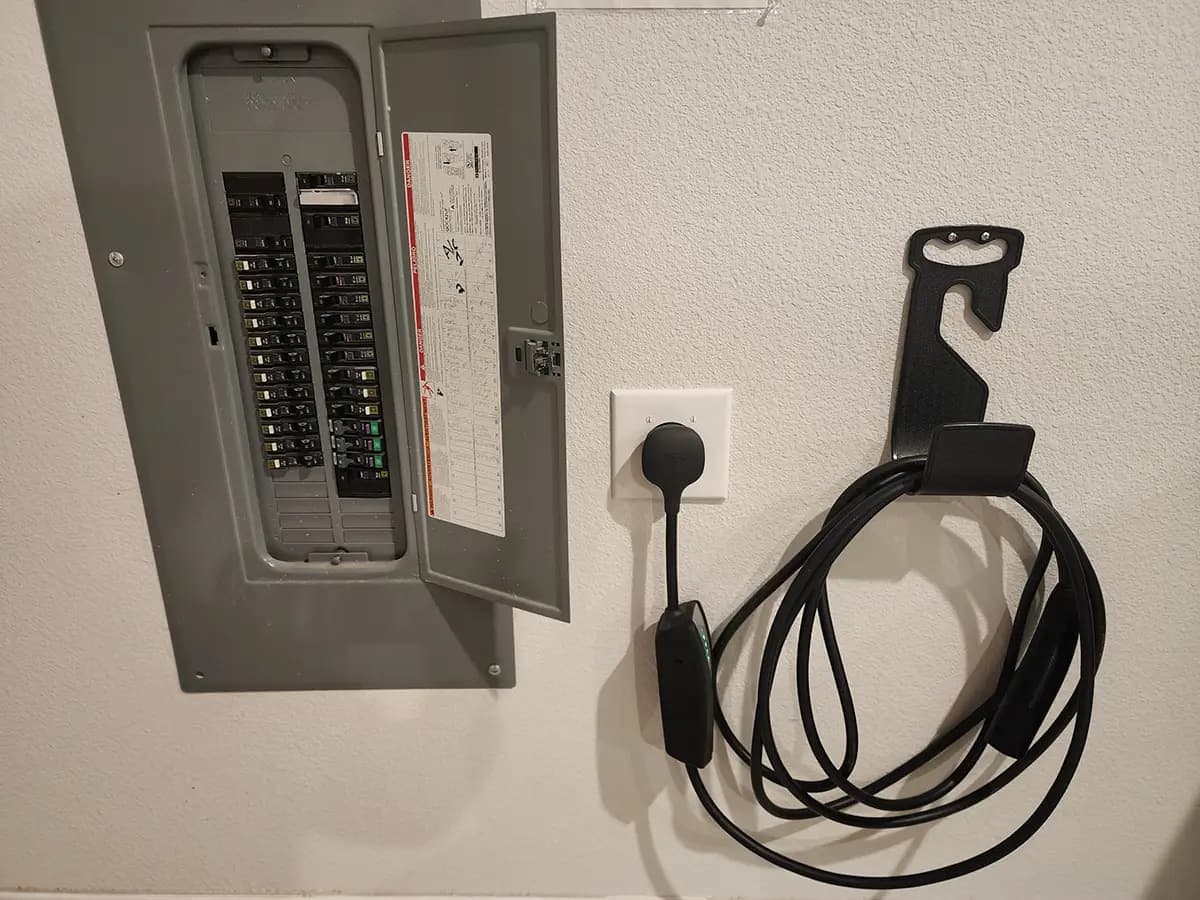
If your lights flicker when the AC kicks on, your breakers trip more than they should, or you're planning to add an EV charger, a panel upgrade is probably somewhere on your radar. It's also one of those projects where homeowners in Collin County — Celina, Prosper, McKinney, Frisco, and the surrounding area — tend to have the same first question: what's this actually going to cost?
There's no single number that fits every home, but there are real, typical ranges, and there are clear reasons a price lands where it does. Here's what actually drives the cost of a panel upgrade in North Texas, and how to know if your home needs one.
Typical panel upgrade costs in North Texas
These are general market ranges for the DFW area, not a quote for your specific home. Your price depends on your panel's condition, your home's age, and what the job actually involves once an electrician opens things up.
| Job Type | Typical Price Range |
|---|---|
| Basic panel swap (same amperage, good access) | $1,500 – $2,500 |
| Standard 100-amp to 200-amp upgrade | $2,500 – $4,000 |
| Full panel + service upgrade (complex jobs) | $3,000 – $4,500 |
| Panel permit (pulled by your electrician) | $50 – $300 |
| Electrician labor rate (non-emergency) | $85 – $160 / hour |
If a job needs emergency service — say a scorched panel or a safety hazard that can't wait — expect labor closer to $150–$300 per hour, since it's typically scheduled outside normal hours. For a planned upgrade, though, you're looking at the standard rates above.
What actually drives the price
A panel upgrade quote isn't just "a panel." A few things determine where your project lands in that range:
- Amperage change. Swapping a panel for one of the same size is simpler than jumping from 100 amps to 200 amps, which usually means new wiring from the meter to the panel.
- Panel location and access. A panel that's easy to reach costs less to work on than one buried behind finished walls, in a tight crawlspace, or in an awkward spot that requires extra labor.
- Service line condition. Sometimes the upgrade stops at the panel. Other times, the wire coming in from the utility connection also needs to be upgraded to safely carry more amperage — that adds cost.
- Permit and inspection. Texas requires a permit for panel work, and that's a real cost your electrician builds into the estimate, not an optional add-on.
- Age and condition of the existing panel. Very old panels (fuse boxes, or certain outdated breaker brands) sometimes need more than a straight swap to bring the whole setup up to current code.
100-amp vs. 200-amp: why it matters
A lot of homes built decades ago in North Texas were wired for 100 amps, which was plenty for the appliance load of that era. Today's homes run central air conditioning, electric ranges, EV chargers, hot tubs, home offices with multiple devices, and more — all at once, often in the same house.
200 amps is the standard for modern residential construction because it gives you room for that load without tripping breakers or straining the system. If you're renovating, adding a room, installing a generator, or planning for an EV charger, a 100-amp panel is often the limiting factor — not your wiring, not your outlets, just the amount of power the panel itself can distribute.
Do you need a permit?
Yes. In Texas, a licensed electrician pulls the permit for panel work and the job has to pass inspection. This isn't paperwork for paperwork's sake — a panel is the point where your entire home's electrical system connects to the grid, and mistakes there create real fire and shock risks. We cover this in more detail in do you need a permit to upgrade an electrical panel in Texas.
Signs your panel might need an upgrade
- Breakers trip regularly, even without an obvious overload
- Your panel still has fuses instead of breakers
- The panel is original to a home built more than 25-30 years ago
- You notice warm spots, buzzing, or discoloration near the panel
- Lights dim or flicker when a major appliance turns on
- You're planning an EV charger, generator, hot tub, or room addition
If any of these sound familiar, it's worth having a licensed electrician take a look. Not every symptom means you need a full upgrade — sometimes it's a breaker panel repair rather than a full replacement, and only an in-person evaluation can tell you which one you actually need.
Why homeowners upgrade
The most common reasons we see across Celina, Prosper, and the rest of Collin and Denton County:
- Adding an EV charger. Roughly 20% of homes need a panel upgrade before a Level 2 EV charger can be safely installed. See our EV charger installation cost guide for specifics.
- Central air conditioning replacement or addition. Newer, higher-efficiency AC units sometimes draw more amperage than an old panel was sized for.
- Home additions or major renovations. More square footage and more circuits means more demand on the panel.
- Aging or unsafe panels. Some older panel brands and fuse-based systems are known safety concerns that insurers and inspectors flag.
- Backup generators. A generator installation often requires panel work to integrate safely with your home's existing circuits.
Getting an accurate number for your home
Cost guides like this one are useful for setting expectations, but the only way to get a real number is to have a licensed electrician look at your specific panel, your home's wiring, and what you're trying to accomplish. A 60-year-old fuse box in a Celina farmhouse and a 15-year-old panel in a Frisco subdivision are two very different jobs, even if they're both called a "panel upgrade."
If you're in Celina, Prosper, McKinney, Frisco, Plano, Aubrey, Little Elm, or The Colony and want a straight answer on what your panel upgrade would cost, request a free quote and we'll walk you through it.
Sources
Frequently asked questions
How much does a panel upgrade cost in Collin County?
Most panel upgrades in the DFW area, including Collin County, run about 2,500 to 4,500 dollars. Simpler swaps can be as low as 1,500 dollars, and complex jobs with a service line upgrade or a lot of rewiring can run higher. Your exact price depends on your home's current setup, so a licensed electrician needs to look at your panel before giving a firm number.
Do I need a 200-amp panel?
200 amps is the standard size for most modern homes and handles central AC, an EV charger, a hot tub, and other higher-draw additions without issue. Many older Collin County homes still have 100-amp panels, which were fine decades ago but often fall short of what a modern household needs.
Is a permit required for a panel upgrade in Texas?
Yes. A licensed electrician pulls the permit and the work has to pass a local inspection. This protects you as the homeowner and confirms the new panel was installed to code.
How do I know if my panel needs to be upgraded?
Common signs include breakers that trip often, a panel that still uses fuses or is more than 25 to 30 years old, warm or discolored areas around the panel, flickering lights when appliances run, or simply wanting to add an EV charger, a generator, or a home addition that the current panel cannot support.
How long does a panel upgrade take?
A straightforward panel swap usually takes one day. Jobs that also involve upgrading the service line from the utility, moving the panel location, or extensive rewiring can take longer. Your electrician can give you a specific timeline after an in-person evaluation.