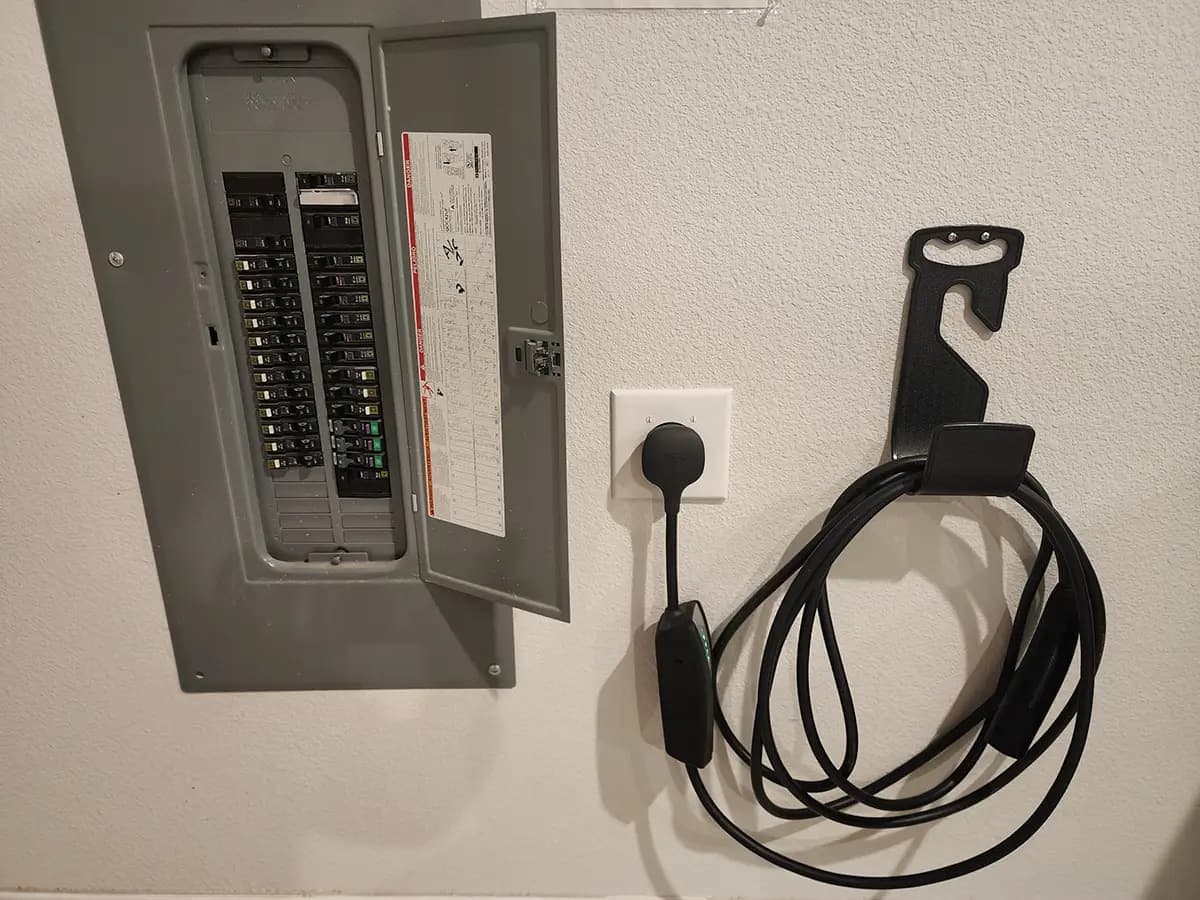
Not always. Most homes can add a Level 2 EV charger without touching the electrical panel - only about 20% of homes actually need a panel upgrade first. Whether yours is one of them comes down to your panel's spare capacity, which an electrician determines with a load calculation, not a guess.
If you're shopping for a home EV charger, this is usually the first real question that comes up, and it's a fair one to ask before you commit to a charger model or a project budget. Here's how to think about it.
The Short Answer
A Level 2 home EV charger typically draws a significant, continuous amount of power - often in the range of 30 to 50 amps on a dedicated 240-volt circuit, depending on the charger and vehicle. Your panel has to have enough unused capacity to add that circuit without exceeding its total rated amperage. For many homes, especially newer ones already wired for 200 amps, that capacity is there. For older or smaller panels, it may not be - at least not without changes.
The only way to know for certain is a load calculation performed by a licensed electrician. Everything else is an educated guess.
Factor 1: Your Panel's Total Amperage
Most homes built in the last couple of decades have a 200-amp panel, which is the current standard and generally has more room to spare. Older homes, particularly those built before the 1980s-90s, sometimes still have 100-amp panels, which leaves a lot less headroom once you account for everything else already running in the house. If you don't know your panel's amperage, it's usually printed on the main breaker inside the panel door, or your electrician can identify it during a visit.
Factor 2: What's Already Drawing Power in Your Home
A panel's rated amperage is its ceiling, not its actual usage - what matters for an EV charger is how much of that ceiling is already spoken for. Homes with electric HVAC, electric water heaters, electric ranges, or other large 240-volt appliances tend to have less spare capacity than homes that rely more on gas for those systems. A load calculation adds up the demand from everything on the panel and compares it against the panel's limit, which is the only reliable way to see how much room is actually left for a charger.
Factor 3: Whether a Load Management Device Can Bridge the Gap
Even when a home is tight on capacity, a full panel upgrade isn't always the only option. Load management devices (sometimes called EV energy management systems) continuously monitor your home's real-time power draw and automatically throttle the charger down when other big loads - like the AC or oven - kick on, then let it ramp back up when they're not. This can allow a charger to be installed safely on a panel that wouldn't otherwise have enough constant headroom, without the cost of a full upgrade. Not every situation is a good fit for this approach, but it's worth asking about before assuming an upgrade is required.
Factor 4: Charger Type and Charging Speed You Actually Need
A Level 1 charger (which plugs into a standard household outlet) draws far less power than a Level 2 charger, but it also charges much more slowly - often adding only a few miles of range per hour. Most homeowners choose Level 2 for practical daily charging speed, which is also where panel capacity questions become more relevant. If your daily driving needs are modest, a lower-draw charging setup might mean an upgrade isn't necessary at all. This is worth discussing with your electrician rather than defaulting to the fastest charger available.
How an Electrician Actually Evaluates This
- Panel inspection. The electrician looks at your panel's rated amperage, age, condition, and available breaker space.
- Load calculation. Using your home's square footage, major appliances, and HVAC system, the electrician calculates the maximum demand already on the panel, following standard electrical code methodology.
- Comparison against available capacity. The calculated existing load is subtracted from the panel's total rated amperage to see what's left over.
- Charger requirements. Your chosen charger's amperage draw is compared against that remaining capacity.
- Recommendation. Depending on the numbers, the electrician will recommend either a direct installation, a load management device, or a panel upgrade - and can walk you through the cost and timeline for whichever path applies.
This process is also where permit requirements get sorted out, since panel work and new circuit installations are typically inspected to confirm they meet current code.
What It Costs Either Way
If your panel has enough spare capacity, a straightforward EV charger installation in North Texas typically runs in the $1,300 to $2,500 range (nationally, EV charger installs range from about $800 to $3,000 depending on the scope of work). If a panel upgrade is needed first, that typically adds $2,500 to $4,500 in the DFW area on top of the charger installation itself, since it involves swapping in a higher-capacity panel - often moving from 100 amps to the 200-amp standard. Electrician labor in the region generally runs $85 to $160 per hour, and panel work usually requires a permit, which commonly costs in the $50 to $300 range depending on the municipality.
For a fuller breakdown of what drives EV charger pricing specifically, see our EV charger installation cost guide for North Texas. If you're weighing a panel upgrade for reasons beyond just EV charging, our panel upgrade cost guide for Collin County covers that in more detail.
A Few Related Upgrades Worth Considering
While an electrician is evaluating your panel for an EV charger, it's often a good time to ask about related protections and upgrades:
- Whole-home surge protection - EV chargers and modern vehicles both contain sensitive electronics that benefit from surge protection at the panel level.
- Tesla Wall Connector installation - if you drive a Tesla specifically, this dedicated charger has its own installation considerations worth discussing alongside your panel evaluation.
- Electrical safety inspection - if your panel or home wiring hasn't been evaluated in years, bundling that inspection with your EV charger consultation can save you a second visit.
Don't Guess - Get a Load Calculation
Panel capacity for an EV charger isn't something you can reliably estimate by looking at your breaker box or checking your utility bill. It requires an actual load calculation from a licensed electrician who can account for your home's full electrical picture. According to ENERGY STAR, matching home electrical upgrades to actual household demand - rather than over- or under-building - is a key part of doing the work safely and cost-effectively, and that starts with an accurate assessment.
Tamenator Electrical Services serves Celina, Prosper, Frisco, McKinney, Plano, and the surrounding North Texas area, and we're licensed and insured under the standards set by the Texas Department of Licensing and Regulation. If you're considering a home EV charger, contact us for a panel evaluation and a free quote so you know exactly what your home needs before you buy.
Sources
Frequently asked questions
Do all homes need a panel upgrade to install an EV charger?
No. Most homes have enough spare capacity on their existing panel to add a Level 2 EV charger without an upgrade. Roughly one in five homes needs a panel upgrade, usually because the panel is older, smaller (like 100-amp), or already running close to capacity from other large appliances.
How do I find out if my panel can handle an EV charger?
A licensed electrician performs a load calculation, which adds up the maximum demand of everything already on your panel - HVAC, water heater, oven, dryer, and so on - and compares it to your panel's rated capacity. That calculation shows whether there's enough headroom for a charger or whether something needs to change first.
What is a load management device and does it avoid the need for a panel upgrade?
A load management device, sometimes called an energy management system, monitors your home's real-time electrical usage and automatically reduces power to the EV charger when other large loads are active, then restores it when demand drops. In many cases this lets a home safely add a charger without a full panel upgrade, though a licensed electrician needs to confirm it's the right fit for your specific panel and usage.
Is a 100-amp panel enough for an EV charger?
It depends on what else is running on that 100-amp panel. Some 100-amp homes have enough spare capacity, especially with a Level 1 charger or a charger paired with a load management device. Others, particularly homes with electric HVAC, electric water heating, or other large loads, are already close to the 100-amp limit and need an upgrade to 200 amps to add a charger safely.
How much does a panel upgrade for an EV charger typically cost?
Panel upgrades in North Texas typically run in the $2,500 to $4,500 range, though the exact cost depends on your home's current panel, amperage needs, and any code-required updates. A licensed electrician can give you an accurate number after evaluating your specific panel.