Lighting Installation
Recessed Lighting Installation in North Texas
Clean, evenly spaced recessed LED lighting for kitchens, living rooms, and hallways — including retrofits into existing ceilings.
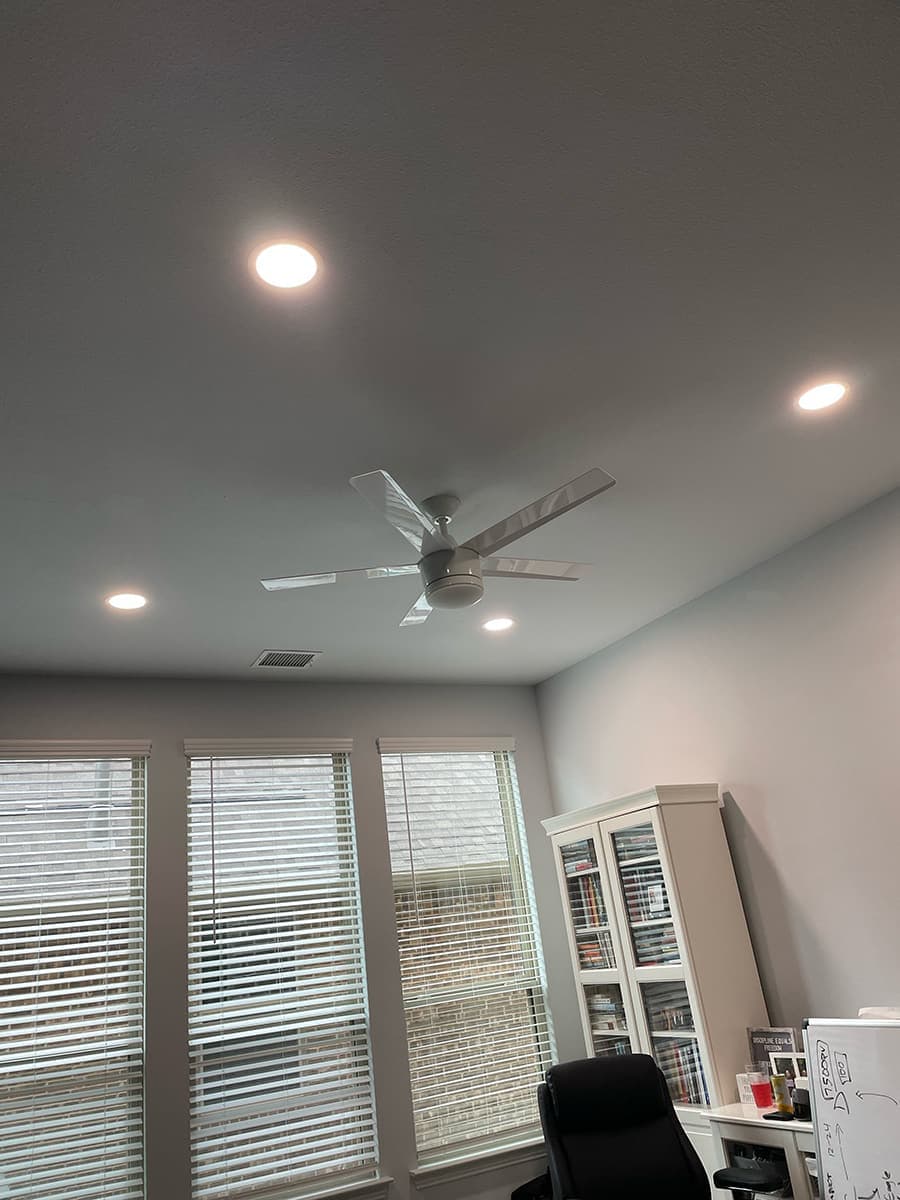
Recessed lighting — often called can lights — is one of the most requested upgrades we do across Celina, Prosper, and McKinney. Done right, it gives a room clean, even light without fixtures hanging down; done wrong, it leaves dark spots, glare, or gaps in the ceiling from a mismatched retrofit. We plan the layout before we cut anything, so the light actually lands where you need it.
Most of what we install now is canless LED — an integrated LED module that mounts directly, without the older metal can and separate bulb. It runs cooler, fits tighter into insulated ceilings, and typically outlasts a standard bulb-and-can setup by years. We also service and replace older can-style fixtures when a homeowner wants to keep the existing housings.
Whether you're relighting one room or adding a dozen cans through the main living area, we'll walk the layout with you and give you a free quote before we start.
What's included
- On-site layout planning against joists, ducting, and existing wiring
- IC-rated fixture selection for insulated ceilings
- Can or canless LED installation
- Dimmer switch installation matched to fixture type
- Drywall patch and paint-ready finish around new cuts
- Removal of old can fixtures when replacing an existing layout
Layout and spacing
Spacing is the difference between recessed lighting that looks intentional and recessed lighting that looks scattered. As a rule of thumb, fixture spacing should be roughly half the ceiling height apart, adjusted for the beam angle and what the light needs to do — general room lighting is spaced differently than task lighting over a counter or reading nook. We map the layout against your ceiling joists, HVAC ducting, and existing wiring before cutting a single hole, which is why our recessed layouts come out even instead of guessed.
See our lighting installation hub for other fixture types if you're relighting a whole room rather than just adding cans.
Can vs. canless (integrated LED)
Canless LED fixtures are thinner, run cooler, and are usually the better choice for retrofits into existing insulated ceilings, since there's less housing to fight through the drywall and insulation. Traditional can-style fixtures with a replaceable bulb still make sense in some new-construction framing or when matching an existing layout. We'll recommend the right type for your ceiling rather than defaulting to one option — ENERGY STAR has useful background on LED efficiency if you want the numbers on energy savings.
Retrofitting insulated and finished ceilings
Most of our recessed lighting work is retrofit — cutting into an already-finished, already-insulated ceiling rather than working with open joists during new construction. That means IC-rated (insulation contact) fixtures, careful hole placement to avoid joists and ducting, and patching that doesn't leave visible seams. If you're doing this alongside a larger remodel, our new construction & remodel wiring page covers rough-in work for open-ceiling projects.
Dimming recessed lighting
Nearly every recessed lighting job we do includes a dimmer, since recessed cans throw more light than most homeowners want at full brightness in the evening. As with any LED fixture, the dimmer has to be rated for LED loads — we'll match the dimmer to the fixture so you don't get flicker or a limited dimming range. Check out our electrical repairs page if you're dealing with an existing dimmer that's already causing issues.
What it costs
Recessed lighting cost mainly comes down to the number of fixtures, ceiling access (open attic above vs. a fully finished, insulated ceiling), and whether new circuits or a new dimmer are part of the job. A four-can kitchen retrofit and a whole-room twelve-can layout are very different scopes. We'll size up your ceiling and give you a typical North Texas range — request a free quote for your specific layout.
Recessed Lighting — FAQ
How many recessed lights does a room need?
It depends on room size, ceiling height, and how the room is used, but a common approach is spacing fixtures roughly half the ceiling height apart. We'll map an exact count and layout for your room during the quote.
Can you install recessed lighting without tearing out my ceiling?
In most cases, yes. We retrofit recessed lighting into existing finished ceilings by cutting individual fixture holes and running wiring through the attic or wall cavity, rather than opening the whole ceiling.
What's the difference between can and canless LED lights?
Traditional can fixtures use a metal housing with a replaceable bulb, while canless LED fixtures have the LED built in and mount more directly to the ceiling. Canless is typically thinner and better suited to tight, insulated retrofit spaces.
Will recessed lights work in my insulated ceiling?
Yes, as long as we use IC-rated (insulation contact) fixtures designed to sit safely in direct contact with insulation. We select the correct rating for your ceiling as part of every install.
Can I dim my new recessed lighting?
Yes, we typically recommend a dimmer rated for LED loads so you get smooth dimming without flicker. It's usually a small add-on to the same visit.
Ready for a straightforward, honest quote?
Licensed & insured, owner-operated, and 5.0★ across 186 reviews. No pressure — just a clear, free quote for your home.